01 · Daily anchor
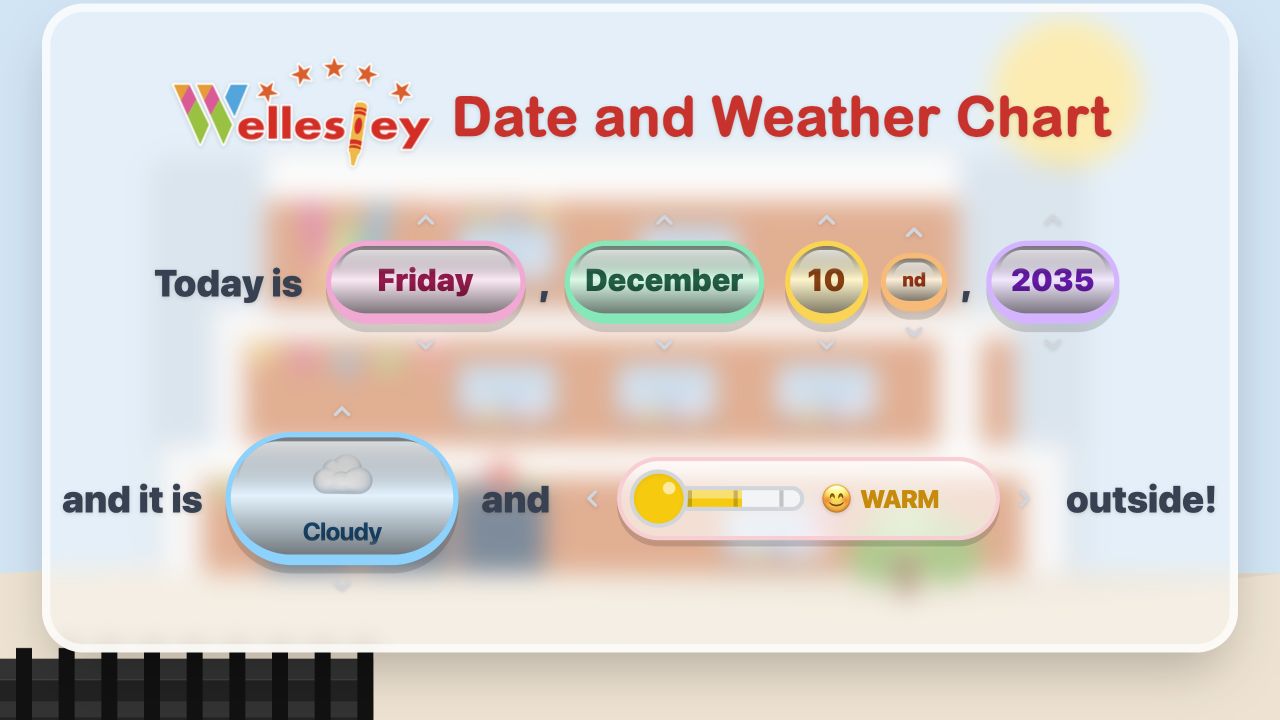
Date & Weather Chart
Build a repeatable opening routine. Choose the date, weather, season and temperature together, then use the board as the starting point for real conversation.
Open the Weather Chart Everyday Practice
A flexible toolkit for every lesson
Start the day, review the words, build the vocabulary and turn practice into something the whole class can see and share.
Start here every day
The Weather Chart has the first and most important place in this collection: a calm, shared routine for the date, season, temperature and the world outside.
Build a repeatable opening routine. Choose the date, weather, season and temperature together, then use the board as the starting point for real conversation.
Open the Weather ChartBuild the daily lesson
Move from letter recognition to instant word recall, visual vocabulary and whole-class review. Each activity opens in its own teaching window.
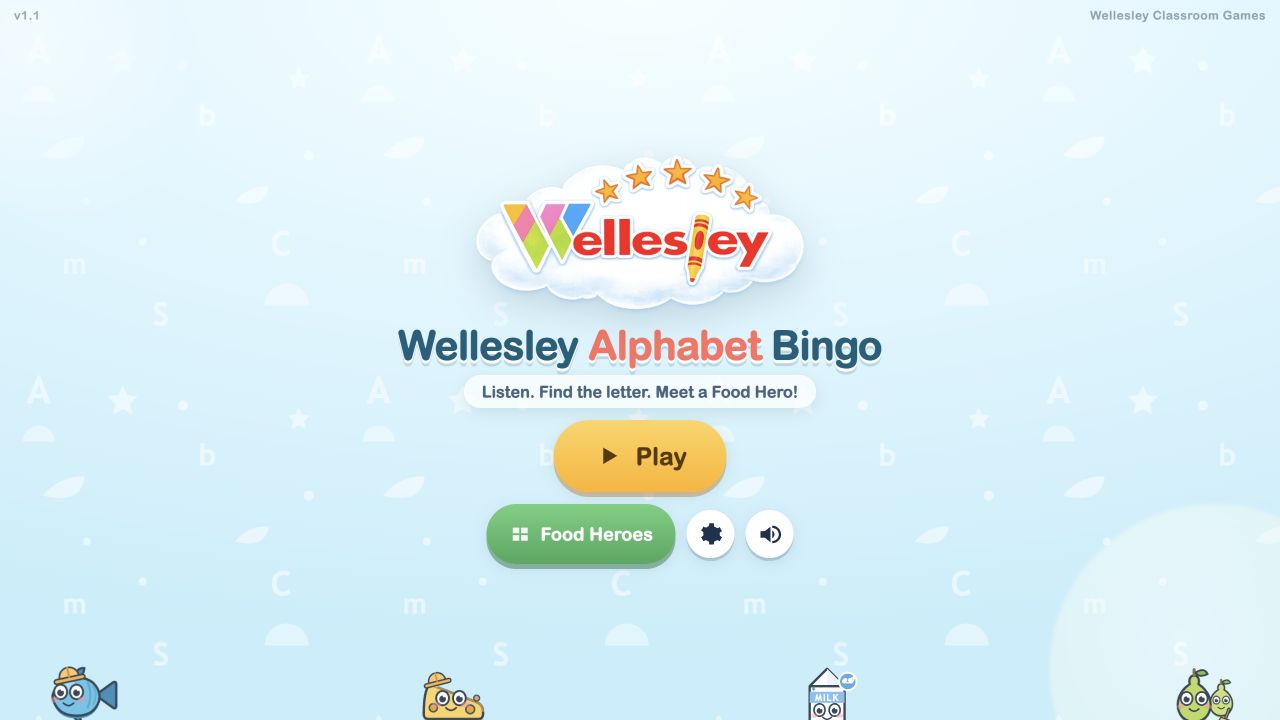
Call a letter, listen carefully and build recognition through a familiar whole-class bingo rhythm.
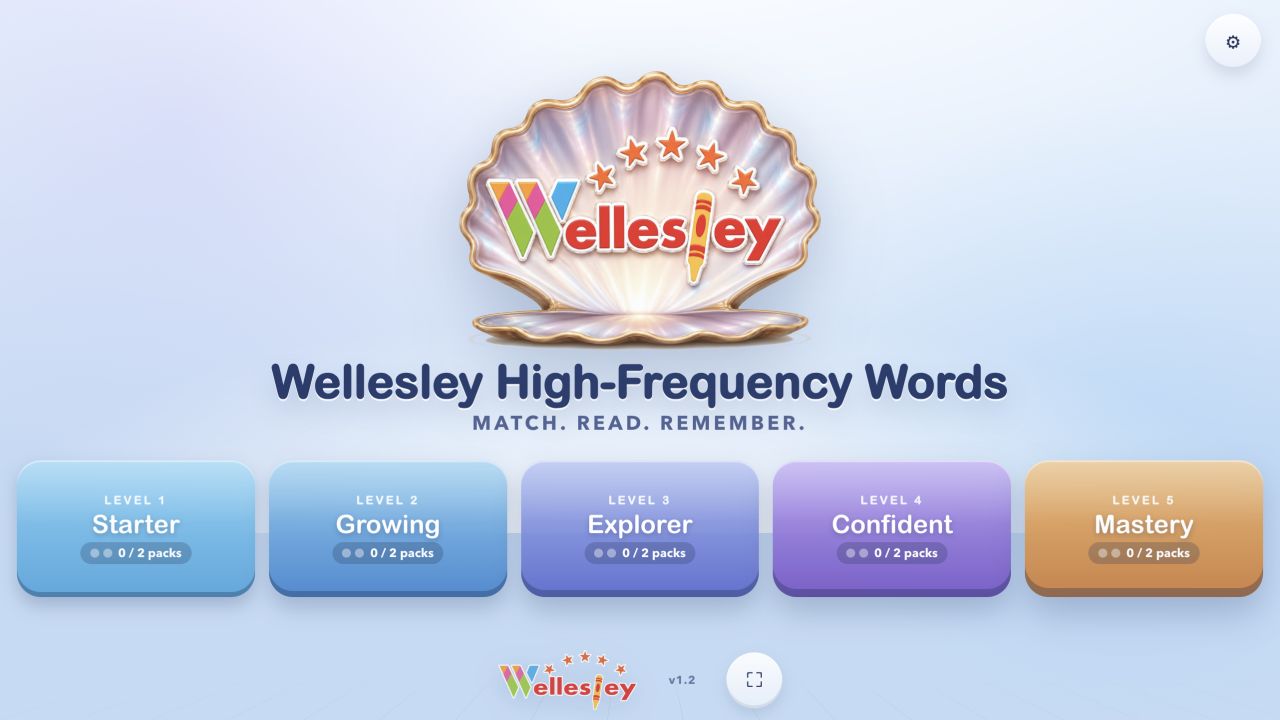
Turn essential sight words into a visual memory challenge that rewards careful reading and recall.
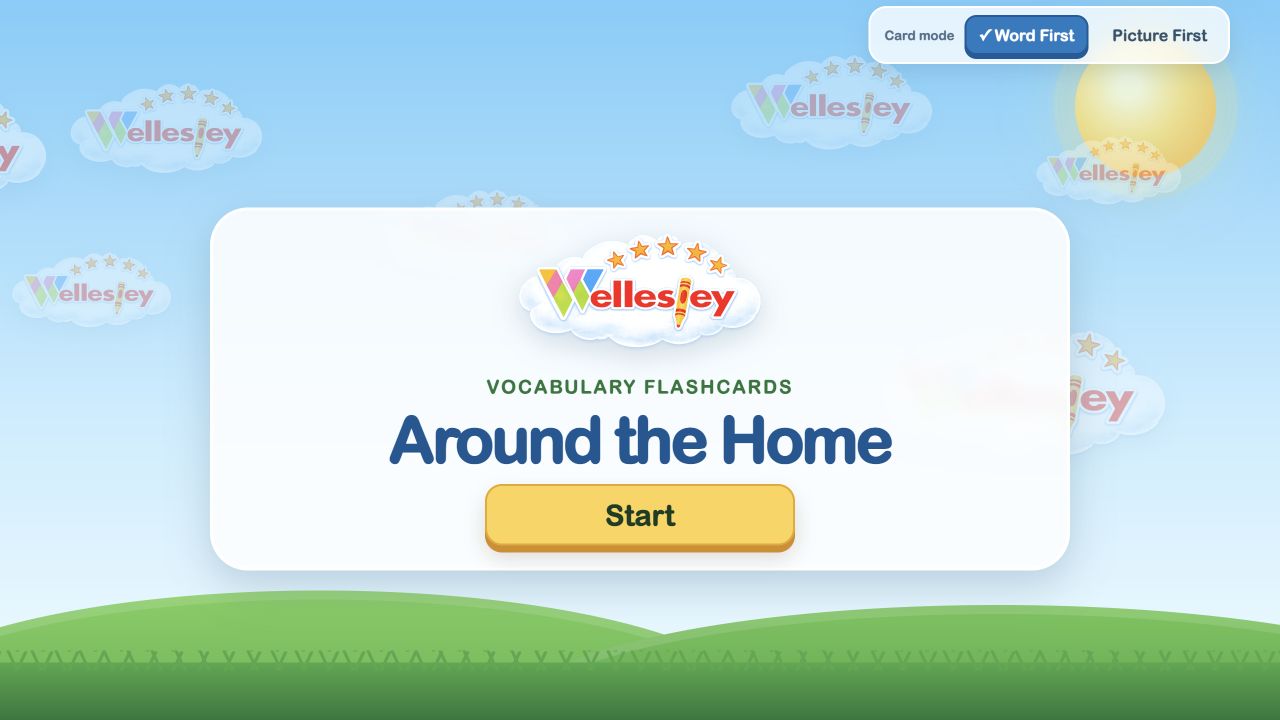
Large, uncluttered picture cards for quick presentation, repetition, speaking prompts and teacher-led games.
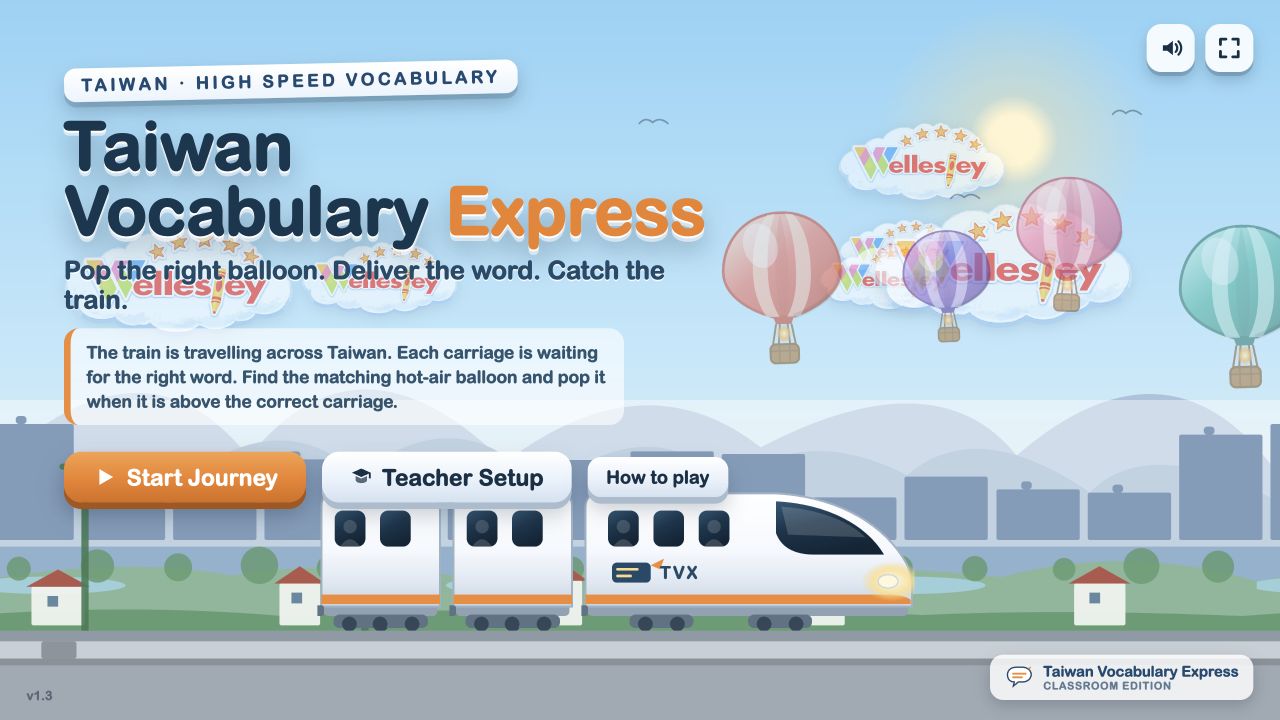
Attach vocabulary to the train and place each word where it belongs in a playful sorting journey across Taiwan.
Play it, then make it yours
Use the ready-made Bomb Game for energetic review, then open the generator to build a version around your own vocabulary, questions and class goals.
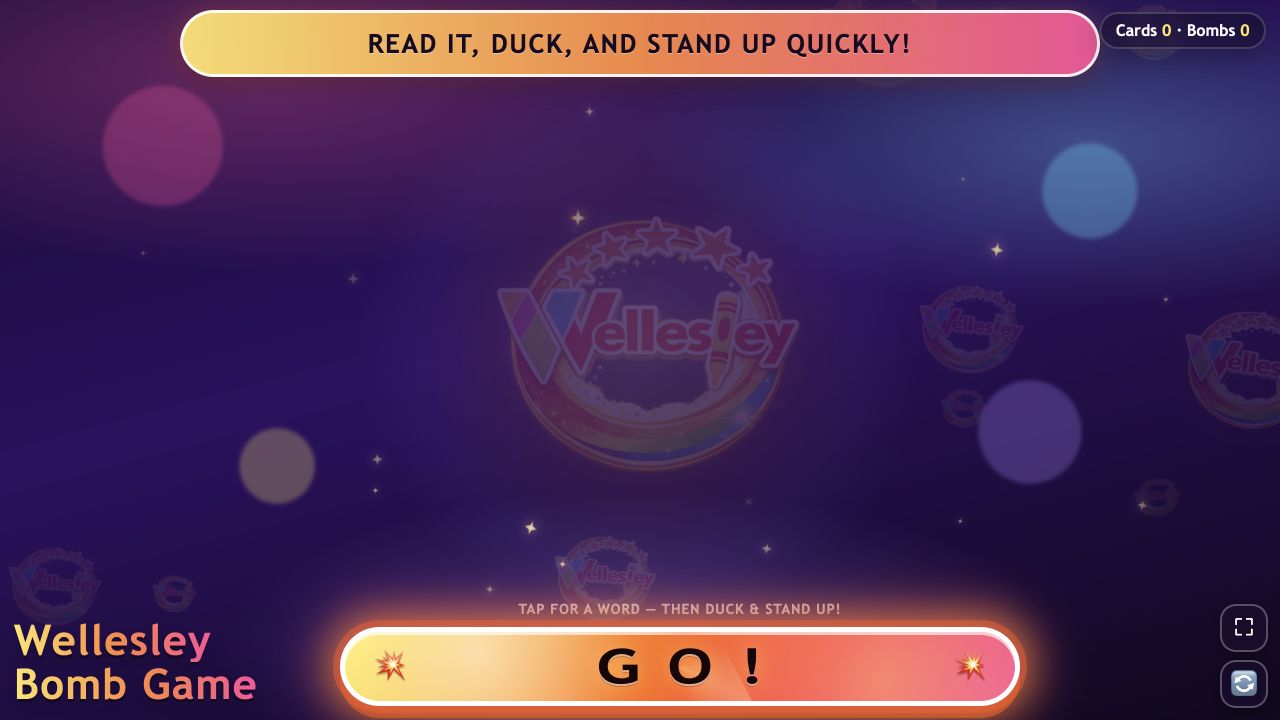
A lively team review board with surprises, score changes and the kind of suspense that keeps every answer important.
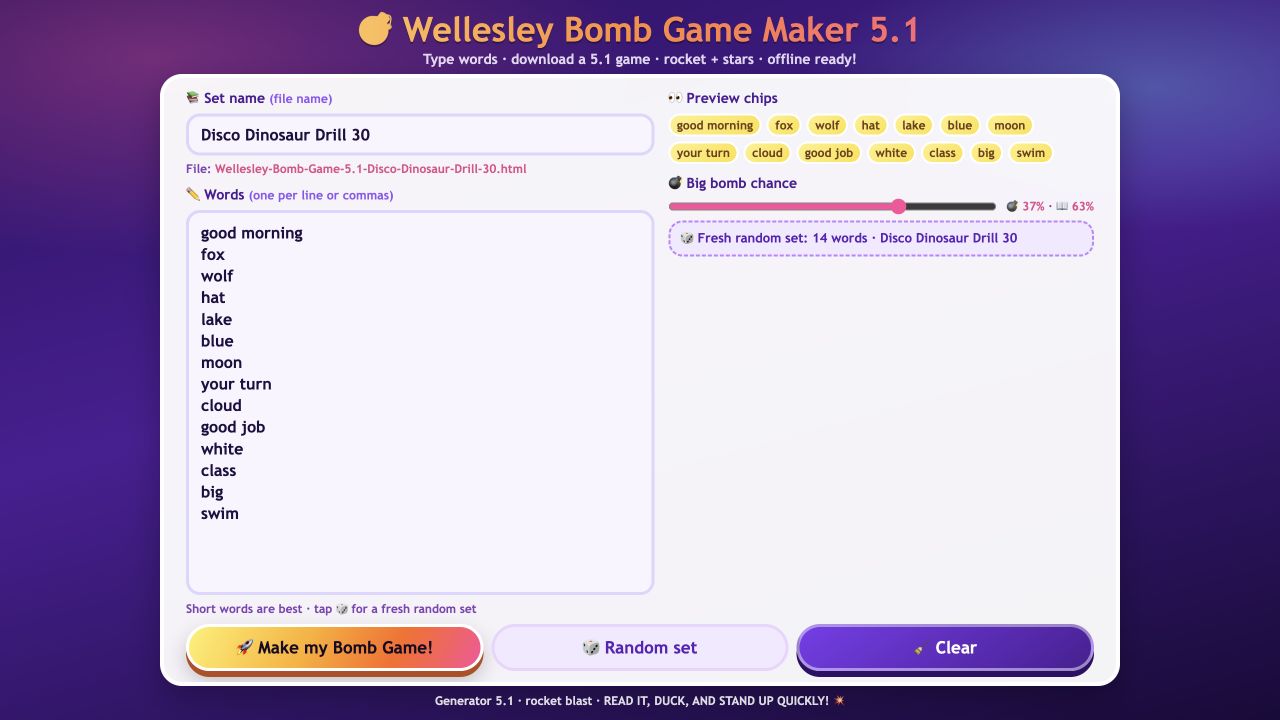
Create a classroom-specific Bomb Game and show how easily the activity can grow around a teacher’s own material.
How it started
The Bomb Game began in October 2024 as an unsuccessful but useful ChatGPT experiment: five words, an automatic two-second loop and a random explosion. It was not yet a teacher-controlled classroom game—but the central idea was alive.
Each new tool helped move the idea forward. Claude made it playable, Gemini made it theatrical, Grok shaped the Wellesley 4.x system, and Codex agents helped turn 5.1 into the polished game and generator teachers can use today.
Five body-part words changed automatically every two seconds, with a ten-percent chance of an explosion. Barely a game—but this was where the mechanic was born.
Play the first prototypeA Start button, a learned-word score and a five-second “everyone hide” countdown gave the teacher control and turned the experiment into a recognisable activity.
Play the Claude versionColourful cloud cards, an animated fuse, screen shake and embedded sound made the game self-contained and far more theatrical on the classroom display.
Play the third iterationVersion 4.4 introduced the Wellesley presentation, card and bomb counters, celebratory firecrackers and the first serious path toward a reusable generator.
Play version 4.4Version 5.1 brings richer motion, stronger Wellesley branding, a more spectacular bomb sequence and a teacher-ready generator—all still open to the next revision.
Play the current gameThe archive also contains dozens of lesson-specific vocabulary editions. This timeline shows one playable representative of each major design generation. That is the real rhythm of vibe coding: try it with a class, keep what works, and build the next version.
More ways to review
Two additional game-show formats give familiar lesson material a fresh classroom pace.
A clear team quiz format for teacher-led questions and fast shared feedback.
Launch Quiz Show ↗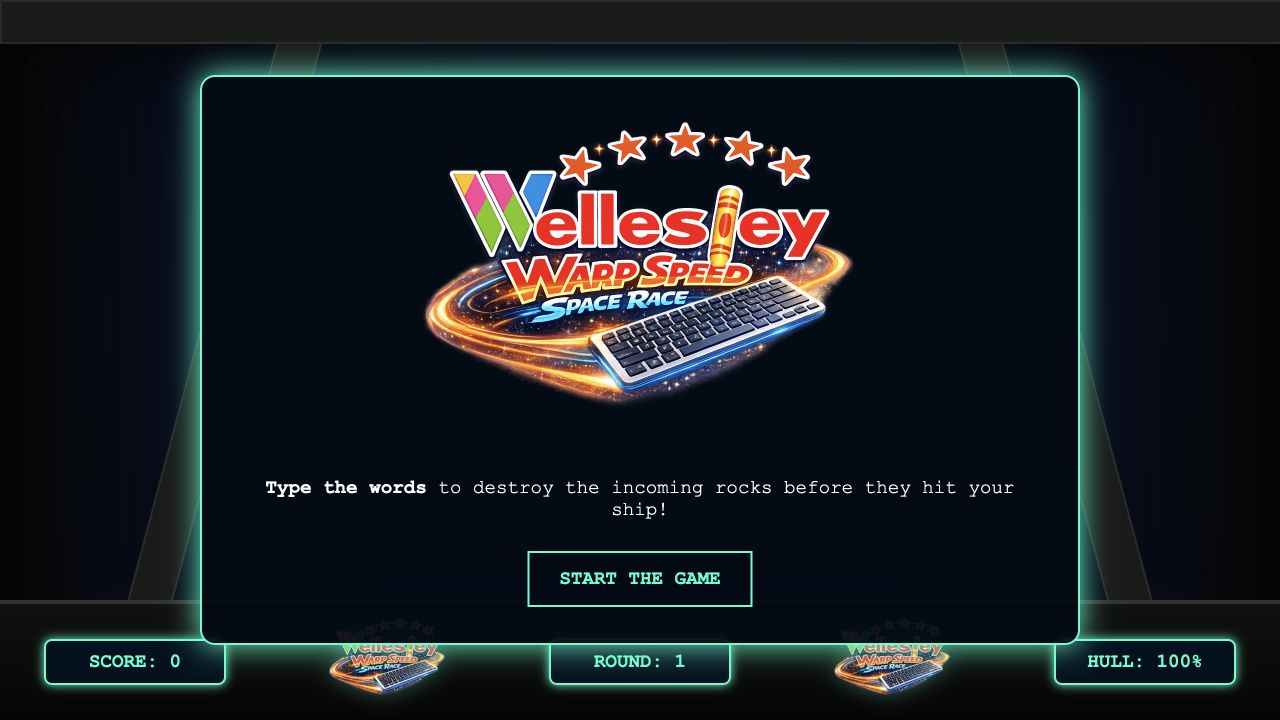
Turn correct answers into forward motion in a bright, competitive space adventure.
Launch Space Race ↗Where everyday practice becomes hybrid play
These final two activities cross into the Wellesley Hybrid Games idea: children respond to the board, then speak, race or move in the real classroom.
See all 23 Hybrid Games
Match sounds and letters, then carry the phonics challenge into a fast, physical classroom race.
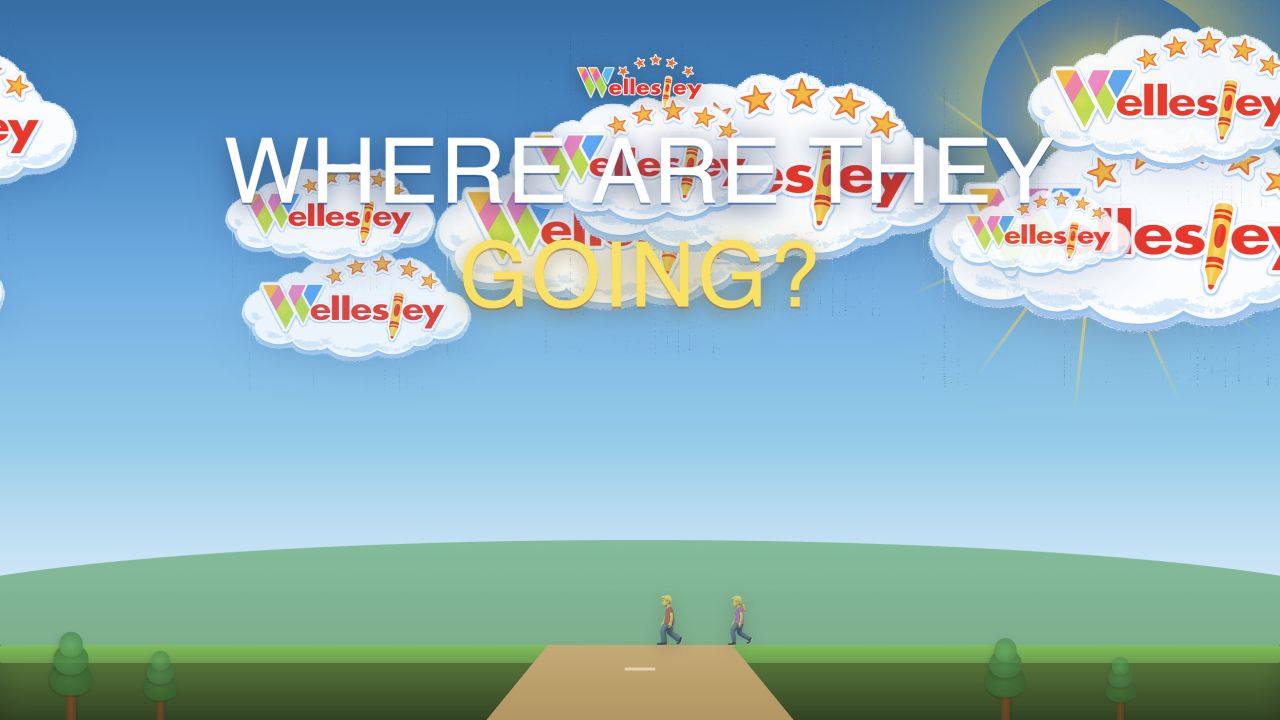
Practice destinations and sentence patterns, then turn the answer into team movement and a shared classroom event.